Form as a Carrier of Memory: Art of Contemporary Africa at Art Palm Beach

22 Jan - 1 Feb 2026
Taking its cue from Jhumpa Lahiri’s reflection on what endures beyond explanation, Form as a Carrier of Memory brings together works that privilege restraint, duration, and attention. Presented by The Melrose Gallery at Art Palm Beach, the exhibition features Esther Mahlangu, Clint Strydom, Samuel Allerton, Gavin Rain, and Carol Cauldwell. Across painting, photography, and sculpture, the works approach memory as something embedded in form rather than narrated through event. Meaning accumulates through pattern, material, and perception, resisting immediacy or closure. The presentation invites sustained looking, proposing form as a vessel through which the unknown continues to reside.
  • Taking the unknown as a starting point, In a world of diminishing mystery, the unknown persists.

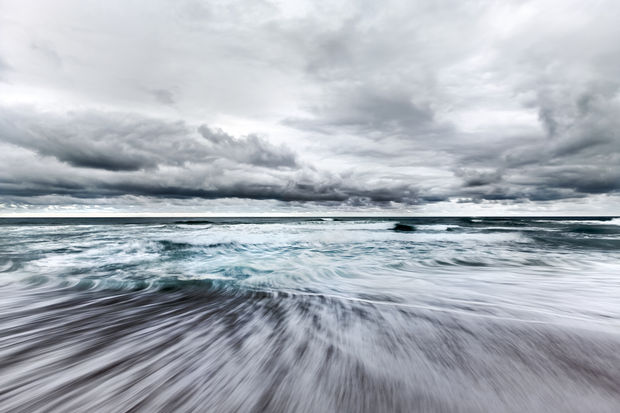
    Clint Strydom
     Oceans 01, 2016
    Hahnemuhle photorag on Diasec dibond/Canvas
    (C008727)


    Taking the unknown as a starting point

    In a world of diminishing mystery, the unknown persists.

    At this year's Art Palm Beach Art of Contemporary Africa presents Form as a Carrier of Memory, a curated selection of works by Esther Mahlangu, Clint Strydom, Samuel Allerton, Gavin Rain, and Carol Cauldwell. This presentation  take's as its starting point  novelist  Jhumpa Lahiri’s novel Lowland - particularly calling on a quote from the text: “In a world of diminishing mystery, the unknown persists.”


    Lahiri’s proposition is utotlised  as a working principle rather than a theme to illustrate so that the exhibition does not seek to reveal hidden histories or resolve meaning. Instead, it considers form as the site through which the unknown endures. 


    Across painting, photography, and sculpture, the works presented share a refusal of immediacy. They privilege accumulation over explanation, restraint over declaration, and attention over resolution. Memory is not narrated; it is carried. Meaning is not fixed; it emerges through time, perception, and embodied encounter.

    In this sense, the exhibition mirrors Lahiri’s literary method. Just as The Lowland allows history to surface through its effects rather than its events, the works gathered here allow memory, inheritance, and experience to persist without becoming fully legible.


  • Too much information, and yet… not enough. In a world of diminishing mystery, the unknown persists.” – Jhumpa Lahiri, The Lowland. 

  • Featured Artists

    Selected works by Esther Mahlangu Clint Strydom Samuel Allerton Gavin Rain Carol Cauldwell
  • Samuel Allerton

    Samuel Allerton’s sculptural practice explores the relationship between humanity and the natural world through bronze, wood, and stone. Rooted in figurative form yet informed by a deep ecological sensibility, his work balances physical strength with vulnerability, often evoking states of endurance, protection, and quiet defiance. His figures appear grounded and alert - shaped by forces both internal and environmental.


    Trained at the Michaelis School of Fine Art and influenced by early exposure to anatomy and music theory,  Allerton’s sculptures are attentive to posture, weight, and tension. His use of traditional materials connects the work to long sculptural histories, while his subject matter speaks directly to contemporary concerns around environmental precarity and human responsibility. The figures do not dramatise conflict; they register it through stillness and restraint.


    Within the concept of Form as a Carrier of Memory, Allerton’s sculptures function as embodiments of ecological memory. They hold the traces of human and natural histories without illustration or narrative. The unknown persists in the quiet tension of the forms—in what is felt rather than explained. Material itself becomes a vessel for memory, carrying the weight of interconnectedness across time.

  • Clint Strydom,
    Clint Strydom
    Oceans 02, South Africa, 2016
    Hahnemuhle photorag on Diasec Dibond
    100 x 150 cm
    Edition of 10 plus 2 artist's proofs
    (C008873)

    Clint Strydom

    Clint Strydom’s practice operates at the intersection of photography, memory, and contemporary image construction. Working with photography and digital layering, he produces images that collapse multiple moments, viewpoints, and emotional registers into single frames. His works resist the conventions of documentary photography, favouring instead a subjective, atmospheric approach that reflects how urban environments are experienced rather than merely observed.


    Shaped by early life on the KwaZulu-Natal South Coast and later immersion in dense cities—most notably Johannesburg—Strydom’s visual language is attuned to light, rhythm, and peripheral detail. Signage, street architecture, fleeting figures, and overlooked spaces recur throughout his work, forming compositions that oscillate between movement and stillness. The city emerges not as a fixed site, but as a psychological and emotional terrain—remembered, layered, and continually reassembled.


    Within the curatorial framework of Form as a Carrier of Memory, Strydom’s works engage memory as something unstable and cumulative. His images do not record singular moments; they hold the residue of time passing, of experiences overlapping. The unknown persists here through fragmentation and opacity—through what is suggested rather than clarified. Form becomes a means of carrying urban memory without resolving it, allowing absence, silence, and ambiguity to remain active within the image.

  • Strydom's Ocean series is conceived as a sustained visual meditation on duration, repetition, and the instability of the horizon. The sea is celebrated as  neither fixed nor monumental, but perpetually in flux—smoothed, blurred, and unsettled by motion.

    Across the series, compositional restraint is central. Horizon lines are held low and distant, while the foreground often dissolves into streaks of movement. Sky and water press against one another, creating a sense of atmospheric density that resists clear spatial orientation. These formal decisions shift the emphasis away from place as a geographic marker and toward experience as something cyclical and embodied.


    Within the curatorial framework of Form as a Carrier of Memory, the Ocean series functions as a study in how form sustains what resists articulation. Memory here is not tied to narrative or event, but to rhythm and recurrence. The unknown persists through motion, atmosphere, and duration, carried quietly within the structure of the image itself

  • Carol Cauldwell
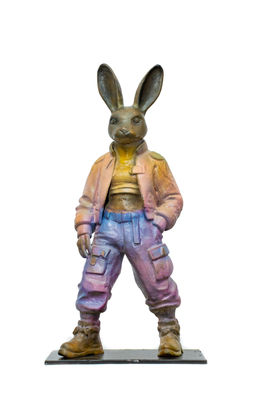
    Carol Cauldwell
    Sola B, 2025
    Bronze
    18 x 8.5 x 5 cm (incl. Base)
    (C008081)

    Carol Cauldwell

    Carol Cauldwell’s sculptural practice is characterised by finely detailed bronze forms that draw on narrative suggestion, folklore, and magic realism. Trained initially in ceramics, her deep material knowledge informs a sculptural language that balances technical precision with playfulness and emotional resonance. Her works often appear whimsical at first encounter, only to reveal deeper social and cultural reflections over time.


  • Cauldwell’s figures and objects frequently reference shared myths, childhood memory, and symbolic transformation. Humour and gravity coexist within her practice, allowing her sculptures to engage difficult themes without didacticism. Working across intimate and monumental scales, she creates forms that invite proximity and recognition while resisting fixed interpretation.


    Within Form as a Carrier of Memory, Cauldwell’s work demonstrates how narrative can persist without closure. Memory operates through association rather than explanation, carried in gesture, posture, and material presence. The unknown remains intact—not as something withheld, but as something allowed to endure through form.

  • Gavin Rain

    Gavin Rain

    Gavin Rain’s practice investigates perception, distance, and visual cognition through a distinctive pointillist technique. His works are constructed from dense fields of raised, concentric dots that oscillate between abstraction and figuration. From close proximity, the image dissolves into rhythmic pattern; from a distance, faces and forms resolve. This movement between states is central to Rain’s practice.


    With a background in neuropsychology and fine art, Rain approaches painting as an inquiry into how meaning emerges. Influenced by Gestalt psychology, architecture, and early modernist abstraction, his work proposes that understanding is contingent on distance—that clarity requires withdrawal as much as attention. The act of seeing becomes temporal, dependent on patience and movement.


    Within the curatorial framework, Rain’s paintings articulate how form carries meaning without immediacy. The unknown persists in the shifting relationship between surface and image, part and whole. Memory is not depicted; it is activated through perception. His work insists that meaning cannot be grasped all at once, reinforcing the exhibition’s emphasis on duration, restraint, and sustained looking.

  • Esther Mahlangu


    Esther Mahlangu

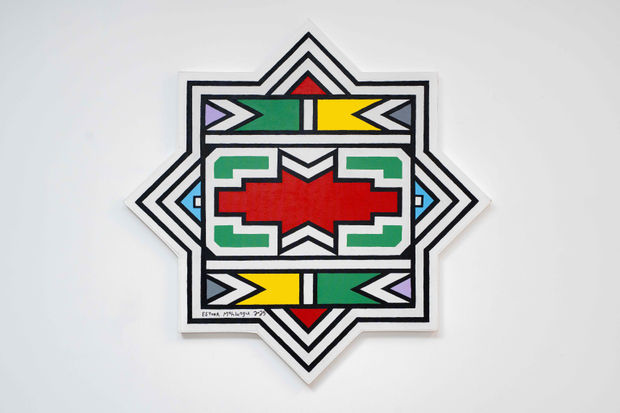
    Esther Mahlangu’s practice stands as one of the most significant and sustained contributions to contemporary abstraction to emerge from Africa. Trained through intergenerational knowledge passed down by her mother and grandmother, Mahlangu learned Southern Ndebele mural painting and beadwork within a cultural system in which visual form functions as both aesthetic language and social knowledge. Long before her work entered museums or galleries, form operated as a mode of transmission—encoding lineage, status, belief, and continuity within pattern, colour, and architectural rhythm.

    Working with geometric abstraction, Mahlangu was among the first artists to shift Southern Ndebele painting from domestic and communal spaces into the context of contemporary art. This transition was not a translation of tradition into a new medium, but an expansion of its formal and conceptual reach. Whether working on canvas, vessels, large-scale murals, or architectural surfaces, her practice maintains an unwavering commitment to precision, repetition, and chromatic clarity. The discipline of the hand—evident in her use of symmetry, line, and colour—anchors the work in continuity rather than individual expression.


    Mahlangu’s abstraction resists categorisation as either decorative or symbolic. Instead, it operates as a rigorous visual system in which form carries meaning without narration. Her compositions do not illustrate stories or reference specific events; they sustain knowledge through structure. Pattern becomes a site of memory—held, reiterated, and refined across decades of practice. This insistence on formal integrity has positioned her work in dialogue with global histories of abstraction, while remaining grounded in Indigenous epistemologies.


    • Esther Mahlangu, Ndebele Abstract, 2025
      Esther Mahlangu, Ndebele Abstract, 2025
      $ 28,000.00
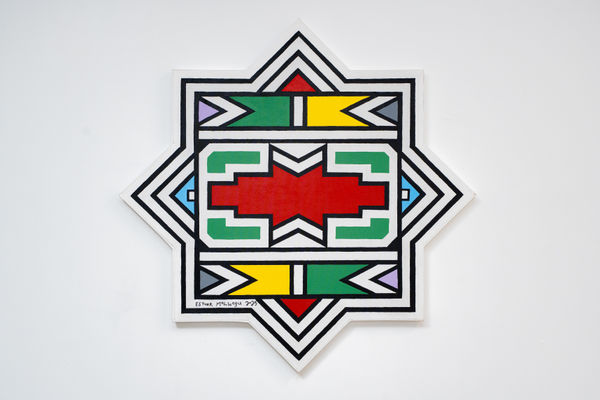
    • Esther Mahlangu, Ndebele Abstract, 2025
      Esther Mahlangu, Ndebele Abstract, 2025
      $ 28,000.00
  • Within the curatorial framework of Form as a Carrier of Memory, Mahlangu’s work provides a foundational logic. Her practice exemplifies how the unknown persists not through concealment, but through continuity. The works presented here do not seek to explain Southern Ndebele culture or make it legible through text. Instead, they allow form itself to carry what cannot be fully articulated: inherited knowledge, lived experience, and cultural memory shaped over generations.

    In this sense, Mahlangu’s work aligns closely with Jhumpa Lahiri’s proposition that even as mystery diminishes, the unknown endures. The paintings hold meaning without resolving it. Memory is not revealed; it is maintained and embedded in rhythm, colour, and repetition. Through form, the work sustains what resists reduction, insisting on presence without disclosure.